The Ripple Impact of Layered Casino Offers on Roulette Participation Patterns
Written by Xander Flores · Jun 25, 2026
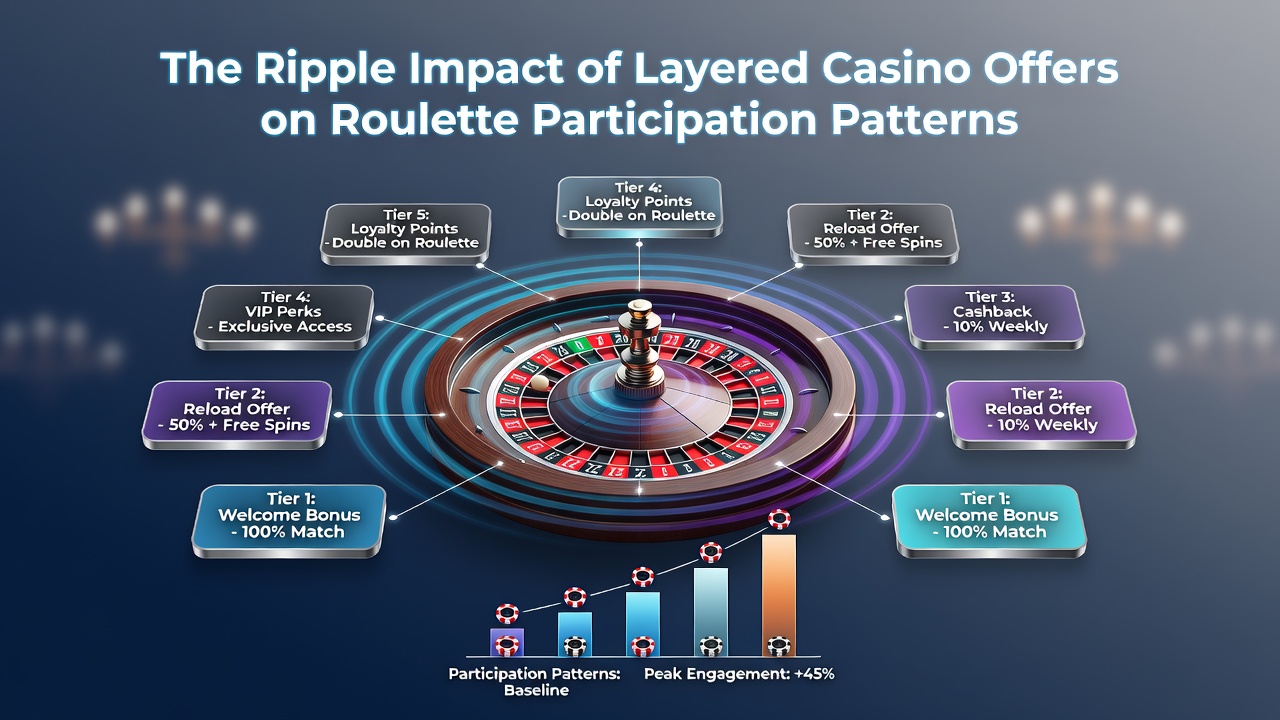
Operators have introduced multi-tiered incentive packages that combine deposit matches, loyalty point multipliers, and conditional free spin allocations, and these packages now shape how players approach roulette across multiple jurisdictions. Participation data collected through 2025 and into early 2026 shows measurable changes in session length, bet sizing, and game selection once players enter these stacked programs. Researchers tracking account-level activity note that players who receive an initial deposit match often extend their first session by an average of 22 minutes compared with non-bonus play, according to aggregated figures released by the Nevada Gaming Commission. When a second layer such as loyalty point acceleration activates after a set number of spins, many participants increase average bet size on even-money wagers while reducing variance on inside bets. The pattern repeats when a third layer unlocks additional spins tied to a minimum deposit threshold, producing further extensions in total time spent at the wheel.Mechanics of Stacked Offers and Player Response
Layered promotions typically follow a progression where the first incentive lowers the entry cost, the second raises the reward rate for continued play, and teh third restricts or redirects the player toward specific roulette variants. Observers note that this structure correlates with higher repeat login rates during promotional windows, particularly when the final tier requires activity within a seven-day cycle. In markets where operators publish anonymized play data, the proportion of roulette spins occurring inside these windows rises steadily once the second tier activates.
One study released by the Canadian Gaming Association examined 18 months of operator records and found that players exposed to three-layer offers placed 31 percent more roulette bets per active week than those receiving single-layer bonuses. The increase appeared most pronounced among accounts that had previously shown low weekly activity, suggesting the structure draws marginal participants into more frequent engagement rather than simply lengthening sessions for already active users.
Regional Patterns Emerging Through Mid-2026
Data gathered across North American and European platforms through June 2026 indicates that participation spikes align with calendar events when multiple operators release synchronized tiered campaigns. In Ontario, where iGaming Ontario publishes quarterly summaries, roulette handle within promotional cohorts grew 14 percent year-over-year during the first half of 2026 while non-promotional handle remained flat. Similar divergence appears in reports covering Atlantic City properties, where layered offers tied to loyalty tiers produced measurable upticks in wheel-based table game volume during the same period.
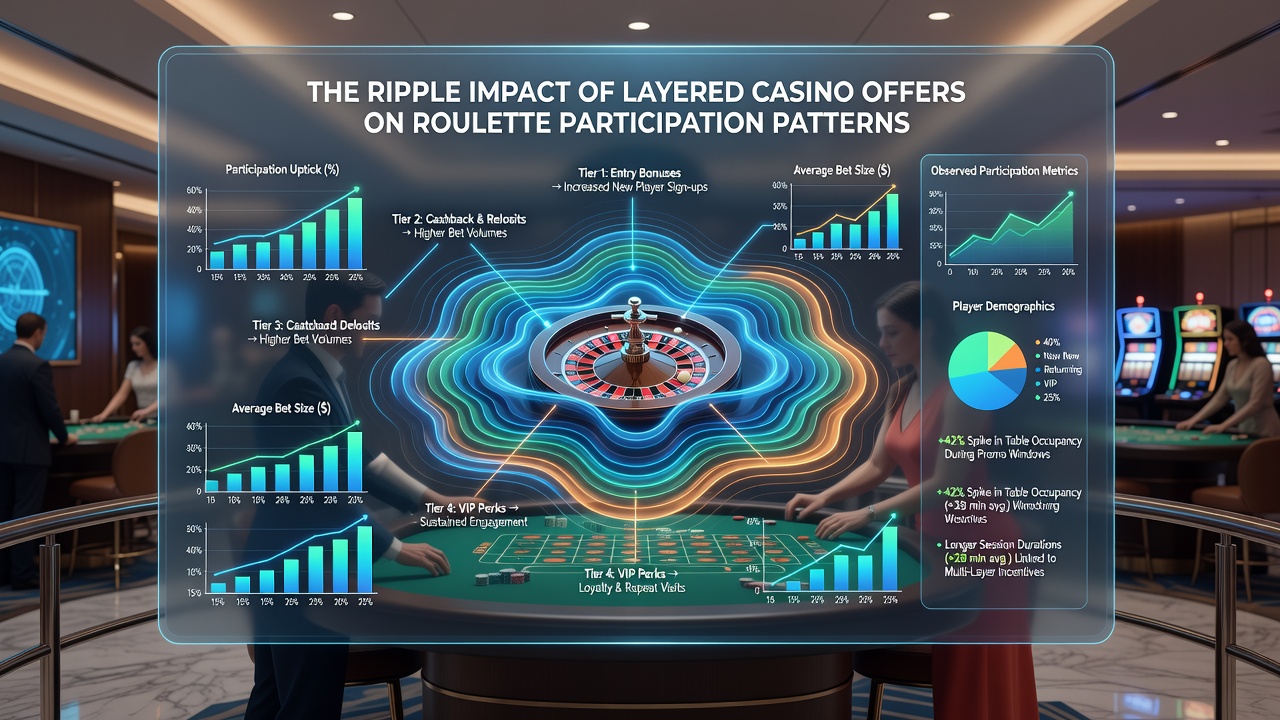
What's notable is the consistency of these shifts across different regulatory environments. Players in jurisdictions with stricter advertising rules still demonstrate the same progression from initial deposit match through loyalty acceleration, even when the promotional language reaches them through email or in-app notifications rather than public campaigns. The sequence produces comparable extensions in session duration and bet frequency once the second and third layers become available.
Behavioral Adjustments Across Player Segments
Segmentation analyses separate high-volume accounts from those with moderate or occasional activity, and the responses differ by group. High-volume players tend to route a larger share of their existing bankroll into the promoted roulette variants once the third tier activates, while moderate players add incremental deposits to unlock the same tier. Both groups show reduced movement between game types during the promotional window, concentrating activity on the wheel formats that satisfy the offer conditions.
Industry reports compiled by the American Gaming Association document parallel trends in land-based and online environments, noting that loyalty-point multipliers attached to roulette produce the strongest retention effect when they stack with deposit matches. Accounts that reach the uppermost tier within a single calendar month exhibit the highest probability of returning within the following 30 days, regardless of whether the operator later extends new incentives.
Measurement Challenges and Available Indicators
Because operators structure the layers differently, direct comparisons require careful alignment of definitions for session length, average bet, and return visits. Regulatory filings in several markets now request standardized fields for bonus-related play, which has improved visibility into the timing of participation changes. These filings reveal that the largest lift in roulette volume occurs between the activation of the second layer and the point at which the third layer expires, after which activity often returns toward baseline levels unless a new cycle begins.
Academic reviews of transaction logs, including work published through the University of Nevada, Reno gaming research program, confirm that the sequence of incentives influences not only volume but also the distribution of bet types. Players progress toward more conservative even-money selections as they accumulate the points or spins required for the next tier, then revert to wider bet spreads once the tier completes.
Conclusion
Available records demonstrate that layered casino offers produce measurable, sequential shifts in roulette participation across different markets and player segments. The timing of increased activity aligns with the activation points of successive tiers, while the scale of the increase varies by prior engagement level. As operators continue to refine these structures and regulators request more granular reporting, the patterns observed through June 2026 provide a baseline for tracking further evolution in how promotional layering affects roulette engagement.