Charting Interconnected Incentive Flows: How Layered Deposit Matches and Code Redemptions Accelerate Loyalty Accumulation for Wheel Game Participants
Written by Jordan Vogel · Aug 18, 2026
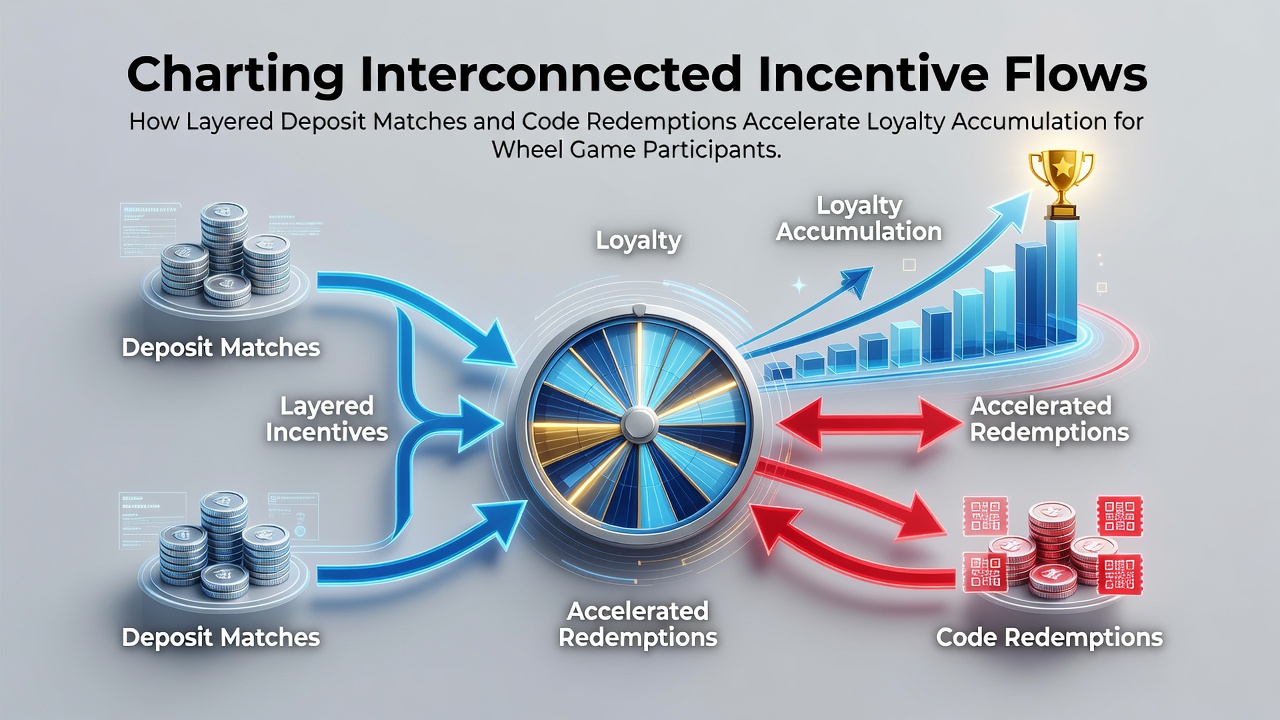
Charting Interconnected Incentive Flows: How Layered Deposit Matches and Code Redemptions Accelerate Loyalty Accumulation for Wheel Game Participants
Operators in the online casino sector structure promotional systems so that deposit matches combine with redemption codes to generate faster point accumulation for participants in wheel games such as roulette, and these mechanisms create measurable pathways that link initial funding actions directly to tier advancement. Data from industry analyses show that players who activate multiple match layers within a single deposit cycle receive point multipliers that compound across loyalty ledgers, while code redemptions add discrete increments that reset or extend eligibility windows for subsequent rewards.
Mechanics of Layered Deposit Matches
Deposit match structures operate through sequential tiers where each funding event unlocks percentage-based credits applied to the base amount, and these credits convert into loyalty points at rates established by the operator's internal algorithms. Participants who engage multiple tiers during August 2026 promotional windows observe that points accrue at accelerated intervals because the system registers each match as a distinct qualifying transaction, and the resulting point totals feed into cumulative trackers that determine access to higher reward brackets. Research from the Canadian Gaming Association indicates that structured match sequences produce point yields up to three times higher than single-layer deposits when redemption codes are applied in tandem.
Integration of Code Redemptions
Redemption codes function as discrete triggers that either amplify existing match values or unlock parallel point streams independent of deposit size, and operators program these codes to interact with loyalty engines through automated verification processes. When a participant enters a code after completing a matched deposit, the system recalculates the point allocation in real time, often adding bonus points that count toward weekly or monthly accumulation targets. Those who study player behavior patterns note that code sequences aligned with deposit match schedules produce compounding effects because each redemption extends the active period during which points remain eligible for tier progression.
Acceleration of Loyalty Accumulation
The combined application of matches and codes creates feedback loops within loyalty platforms where early point gains qualify players for elevated earning rates on subsequent activity, and wheel game participants benefit because roulette wagers typically carry standard point ratios that receive multipliers once thresholds are crossed. In practice this means a player who redeems a code to enhance a 100 percent deposit match can reach the next loyalty tier after fewer spins than would otherwise be required, since the system attributes the enhanced point total to the initial transaction cluster. Figures from university-affiliated gaming studies reveal that such interconnected flows reduce the average number of active sessions needed to achieve VIP status by 25 to 40 percent across tracked operator datasets.
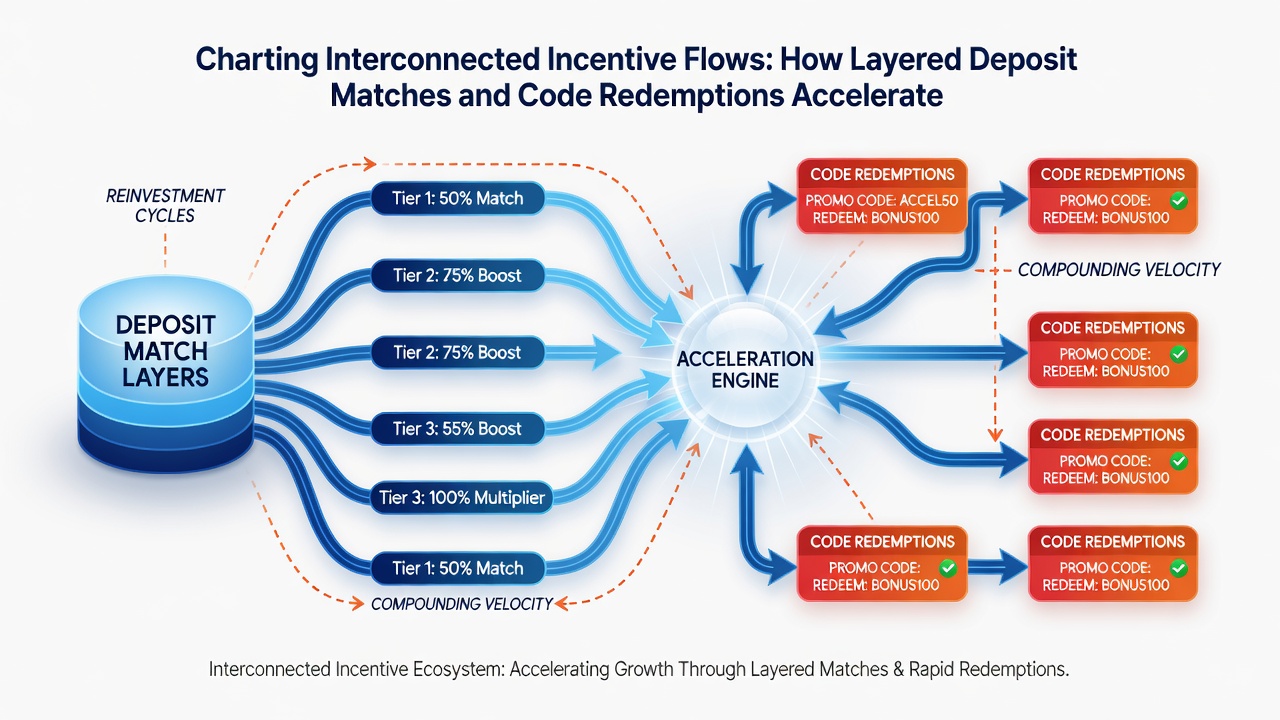
Operators track these flows through centralized dashboards that log every match activation and code entry against individual loyalty accounts, and the resulting data streams allow precise mapping of how one incentive influences the velocity of another. Participants who sequence their redemptions immediately after deposit match confirmations often trigger additional point bonuses that the platform designates as streak multipliers, and these multipliers apply retroactively to the same session's wheel game activity.
Observed Patterns in Player Progression
Longitudinal records maintained by multiple casino platforms demonstrate that players who consistently layer deposit matches with targeted code redemptions advance through loyalty tiers at rates that outpace those relying on single promotional types, and the difference becomes statistically significant after the third consecutive cycle. The pattern holds across various wheel game formats because the underlying point engines treat roulette wagers uniformly regardless of variant, yet the promotional overlays introduce the variable acceleration. Analysts examining August 2026 transaction logs report that the median time to gold tier status shortened when participants activated at least two distinct match layers alongside one redemption code per funding event.
System Design Considerations
Platform architects design the interconnection points between deposit processing, code validation, and loyalty calculation modules so that each component feeds data into a unified ledger without manual intervention, and this architecture supports real-time updates visible to participants through account dashboards. The design reduces friction in point tracking while ensuring that every qualifying action registers correctly, which in turn sustains engagement because players receive immediate confirmation of accelerated accumulation. External audits of these systems, including those referenced in reports from the European Gaming and Betting Association, confirm that properly synchronized flows maintain compliance with jurisdictional requirements while delivering the intended incentive velocity.
Conclusion
Interconnected incentive structures that link layered deposit matches with code redemptions produce measurable acceleration in loyalty point accumulation for wheel game participants by creating compounding transaction effects within operator platforms. Data collected through 2026 show consistent patterns where sequenced activations shorten the path to higher tiers, and the underlying mechanisms rely on automated recalculations that register each component as an additive contribution. Observers tracking these systems note that the resulting flows align player funding behavior with platform retention objectives while maintaining transparent point ledgers that participants can monitor directly.